Over 5 million online stores in more than 175 countries run on Shopify today - roughly one in five ecommerce stores worldwide. With that many brands choosing the platform, it must be doing something right. The question is: what exactly?
This article is a practical guide to Shopify in 2026 - from the perspective of an agency that builds Shopify stores every day. Current pricing (it changed in 2025), European market integrations, honest pros and cons, and a straight answer to who Shopify makes sense for and who should look elsewhere.
Shopify is an ecommerce platform that runs on a SaaS (Software-as-a-Service) model. That means your store exists as long as you pay the monthly subscription - Shopify provides the infrastructure, hosting, security, and updates while you focus on selling.
Sounds like every other SaaS commerce platform? Yes, up to a point. Shopify stands out on three fronts: scale (5 million stores is a testing ground nobody else has), flexibility unusual for SaaS (Shopify Functions, Hydrogen for headless, an ecosystem of 13,000+ apps), and the fact that the world's biggest brands - Gymshark, Allbirds, Kylie Cosmetics, Heinz, Mattel - choose it as their production platform, not as an experiment.
You can build a Shopify store in an hour using drag-and-drop. You can also build a sophisticated DTC platform with a headless storefront, custom checkout logic, B2B, and a multi-region international ecosystem. The scale of the solution depends on how ambitious your business is - Shopify handles both.
Shopify is a cloud platform. The entire infrastructure - servers, hosting, security, backups - sits on Shopify's side. You manage your store through an admin panel accessible from any device with internet. No VPN, no logging into a company server, no configuring your own hosting.
The center of operations is Shopify admin - one place where you manage your product catalog, orders, customers, inventory, shipping, marketing, integrations, and analytics. If you sell across multiple channels (your own store + Amazon + Instagram + TikTok Shop), all sales data flows into one dashboard.
7 steps to start selling
Realistic time to launch a store: simple store on a free theme with ready-made products - 4-8 hours of work. Store with custom design and a few integrations - 4-8 weeks with an agency. Complex DTC platform on Shopify Plus with headless and B2B - 10-16 weeks with a development team.
Yes. And it works better every year. Four years ago, Shopify in Europe had serious gaps - limited native local payment methods, weaker localized support, fewer integrations with regional carriers. Today, most of those gaps have been closed.
Regional payment methods
Currently you can natively integrate on Shopify:
Regional shipping carriers
DHL, FedEx, UPS, DPD, GLS, plus local carriers (InPost in Poland, Hermes in UK, Colissimo in France) - all available natively or through apps (Sendcloud, Shippo, Easyship). Locker delivery (InPost paczkomaty in Poland, Bring lockers in Scandinavia) is increasingly the standard customers expect - easy integration via dedicated apps or aggregators.
Languages and support
Shopify admin is fully translated into multiple European languages, including Polish, German, French, Italian, and Spanish. The frontend (what your customers see) can be configured in any language - all premium themes, including Wonder Theme https://themes.shopify.com/themes/wonder built by Nethype, ship with EU translations (EN/FR/IT/DE/ES) plus full editability for any other language. Shopify support runs 24/7 in multiple languages.
Polish streetwear, stocked at Selfridges and Browns

Austrian brand with a heritage dating back to 1872, specializing in premium lingerie, nightwear, and swimwear, combining high-quality materials with timeless design

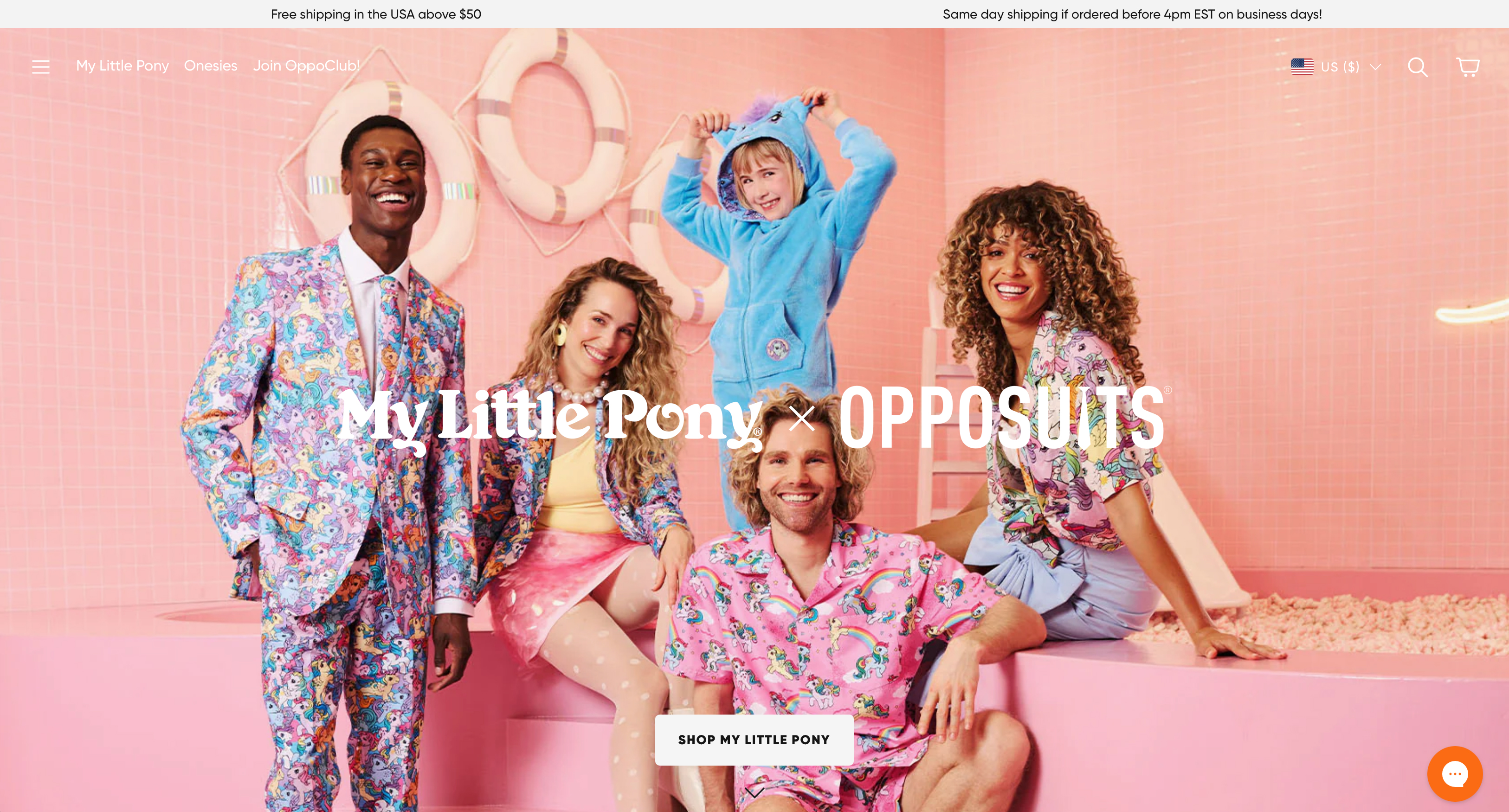
(Dutch fashion brand known for bold, colorful, and humorous suits designed to stand out at parties, events, and themed occasions)
UK Luxury fashion. The brand blends glamour with a modern edge, often creating pieces designed for nightlife, events, and confident self-expression

Modern premium bottled water brand focused on purity and transparency, sourcing water from protected mountain springs

Australian skincare brand focused on clean, cruelty-free, and science-backed products designed to simplify daily routines with effective, no-fuss formulations

At Nethype, we migrated MISBHV from Magento 2 to Shopify Plus, and Floordirekt from Magento 2 to Shopify. These migrations involved multilingual catalogs, complex variant logic, and tight coordination with wholesale operations. If you currently run a store on Magento, WooCommerce, PrestaShop, or another platform and you're considering Shopify - we're happy to discuss your situation in a free consultation - info@nethype.co
This is the most-asked question - and the answer is more nuanced than "$X per month." The cost of running on Shopify breaks down into four components: platform subscription, transaction fees, app costs, and implementation cost. Let's go through each.
Current Shopify plan pricing (2026)
In 2025 Shopify renamed its plans - "Shopify" became "Grow." Current plans and prices on monthly billing (USD):

Worth noting: annual billing gives a 25% discount on Basic, Grow, and Advanced plans - one of the biggest savings you can lock in from day one if you're planning to use Shopify for more than a year.
Monthly vs annual billing - the math

Transaction fees
This is where hidden costs can hurt. Shopify charges a transaction fee on top of your payment gateway fee - unless you use Shopify Payments (in which case the additional Shopify fee disappears, leaving only the standard card processing fee).

Practical insight: for a store doing $50,000/month on the Basic plan, the additional 2% Shopify fee (when using an external payment gateway) adds up to $1,000/month - more than the entire plan costs. That's why for most stores, switching from Basic to Grow or using Shopify Payments instead of an external gateway pays off mathematically at relatively low transaction volumes.
This is the one category Shopify doesn't control. This is where your team or agency comes in. Three scenarios:

Time savings with Wonder Theme: instead of building a custom theme from scratch (10-14 weeks), you start with one of the 5 Wonder Theme presets https://themes.shopify.com/themes/wonder matched to your vertical (beauty, fashion, wellness, home decor, one-product DTC) and customize it to your brandbook. Build time drops to 6-8 weeks while keeping the premium custom feel. The theme itself is a one-time $390 license in the Shopify Theme Store.
Shopify has grown out of the "simple SaaS for small stores" model - today it's a full ecommerce ecosystem with features that no SaaS platform offered just five years ago. What you get out of the box:
Drag-and-drop store building
Shopify's section editor lets you build your store yourself by clicking and dragging blocks - no code required. Every theme is composed of sections (hero banner, product list, FAQ, testimonials, before/after, mega menu) you add, remove, and rearrange in the panel. Most Shopify stores never need to touch Liquid (Shopify's templating language).
Headless commerce with Hydrogen
Most SaaS platforms don't let you separate the frontend from the backend - you get what you get. Shopify breaks this rule by offering Hydrogen - a framework for building headless storefronts on React. You can keep all the store and checkout logic on Shopify but build a completely custom frontend for specific devices (web, mobile app, smart TV, in-store kiosks). This is rare in the SaaS world and one of the main reasons Shopify wins enterprise clients.
Custom logic via Shopify Functions
Shopify Functions let you write custom logic that plugs into the platform's core - things that were previously impossible on SaaS. Examples: a custom promotion type valid only for a specific product variant on specific days, custom order allocation logic across warehouses, custom shipping methods that depend on cart contents. This turns Shopify from a "rigid SaaS" into a platform you can actually adapt to non-standard business models.
Subscription commerce
Full support for the subscription model - natively via Shopify Subscriptions or through apps like Recharge, Loop, or Bold. Works perfectly in verticals where subscriptions lift LTV: supplements, coffee, cosmetics, household products, beauty refills. Customers get flexible cycles (every 30/45/60 days), pause/skip without contacting support.
Multi-market sales via Shopify Markets
Shopify Markets lets you sell across multiple regions from a single store - different currencies, languages, payment methods, taxes, regional pricing. A US brand entering Europe gets in one panel: USD for US, EUR for EU, GBP for UK, with translations and local payment methods (Klarna in DE, iDEAL in NL, Bancontact in BE). This saves hundreds of development hours that brands waste trying to do the same on WooCommerce or Magento.
B2B and DTC under one roof
Shopify Plus delivers full-featured B2B - company accounts, custom catalogs per buyer, NET payment terms (30/60/90 days), wholesale pricing, draft orders, tax exemption. The key thing: B2B and DTC run on the same store and the same panel. Your brand can have a DTC site for consumers and a closed B2B portal for wholesale buyers, managed from one place.
Selling through social media
Native integrations with Facebook, Instagram, TikTok, YouTube, Pinterest. Your Shopify catalog automatically syncs to social media, customers buy without leaving the app, and sales data flows into the Shopify panel.
Automation through Shopify Flow
Shopify Flow lets you build "if X, then Y" workflows without code. Examples: automatic VIP tag for customers crossing a purchase threshold, alert when stock of a specific product drops below 10 units, automatic category assignment for newly added products. Available on every plan, but capabilities scale with the plan (Plus has the broadest set of triggers).
No platform is perfect, and Shopify has its specific strengths and weaknesses. Here's an honest list, based on experience from dozens of implementations and migrations.
Shopify pros
Shopify cons
Shopify works great for most stores - but not for everyone. Here's the honest answer.
Shopify is for:
Shopify is NOT for:
Reality check. The first conversation we have with every potential client includes "should you actually move to Shopify" as a real question. Free consultation - info@nethype.co
Short answer: if you fit one of the archetypes from the previous section - yes, it's worth it. Shopify didn't reach market leader position by accident. It's a genuinely strong platform that solves 80–90% of typical ecommerce problems out of the box.
Longer answer: yes, it's worth it, but before deciding calculate 3-year Total Cost of Ownership (TCO). Most founders compare only the subscription price, which is the smallest component of the cost. Real cost includes: subscription + transaction fees + apps + theme + implementation + annual maintenance. Shopify wins TCO comparison against Magento and WooCommerce in 80% of cases, but not in every case.
Second thing: don't give in to the "fast, faster, fastest" pressure. Shopify lets you launch a store in an hour - that doesn't mean you should. Time spent on research (which theme, which apps, which integrations, what migration strategy) returns tenfold in the first year.
Free consultation - info@nethype.co
If you're considering launching a store on Shopify, migrating from Magento, WooCommerce, BigCommerce, or Presta Shop, or want to discuss whether Shopify even makes sense for your business we offer a free consultation - info@nethype.co
The first 60 minutes is a conversation about your business, your current store (if you have one), your 12-month plans. No commitment, no sales pitch. After the call you'll get a concrete quote with a timeline - or honest feedback that Shopify isn't your best choice.
Write to info@nethype.co - we usually respond within 24h.
If you'd rather start by exploring what a premium Shopify theme can do, check out Wonder Theme in the Shopify Theme Store → https://themes.shopify.com/themes/wonder - 5 presets for different verticals, $390 one-time license.